

Red gingiva: what it means, what is causing it, and when it needs professional attention
Healthy gum tissue is a specific colour, and it is not red. If the gingiva around your teeth has become red, whether in a localised area or across the whole arch, it is signalling an inflammatory response. Something is happening in or around the gum tissue that has triggered the immune system to increase blood flow, dilate blood vessels and recruit inflammatory cells to the area.Red gingiva is a clinical sign, not a diagnosis. It is the gum tissue's visible response to a challenge, and the challenge differs considerably between patients. Bacterial plaque is responsible in the majority of cases. Hormonal changes, medications, systemic conditions, viral infections, and mechanical trauma can all produce red, inflamed gingival tissue independently of, or in combination with, the bacterial component.Understanding the specific cause of red gingiva determines the appropriate treatment. A patient whose red gingiva is caused by plaque-driven gingivitis needs professional cleaning and improved home care. A patient whose red gingiva is the presenting sign of a systemic condition needs both dental and medical assessment. Getting the cause right is where clinical assessment matters.At Winchester Avenue Dental Surgery in Leicester, led by Dr Zeinab, our principal dentist, dental check-ups include a thorough assessment of gum tissue appearance alongside probing, bleeding assessment and soft tissue examination. Emergency appointments are available seven days a week for £40 when symptoms are acute. Here is the complete clinical picture.
What healthy gingiva looks like: establishing the baseline
Before detailing what causes red gingiva, it helps to define what the tissue should look like when it is healthy, because patients often do not have a reference point for comparison.Healthy gingiva is:- Pale pink in colour, though the exact shade varies normally with skin tone and ethnic background. Individuals of African, South Asian and Middle Eastern heritage commonly have naturally darker gingival pigmentation from melanin, which is entirely normal and not a clinical concern.
- Firm and well-attached to the underlying bone and tooth surface. It does not bleed when touched by a toothbrush, dental floss, or the gentle pressure of a periodontal probe.
- Stippled in texture. The attached gingiva (the band of firmer gum bound to the bone) has a finely textured, orange-peel appearance in health. When inflamed, this stippling disappears and the surface becomes smooth and shiny.
- Well-contoured around each tooth, with pointed papillae (the triangular gum tissue between adjacent teeth) filling the interdental spaces to the contact point.
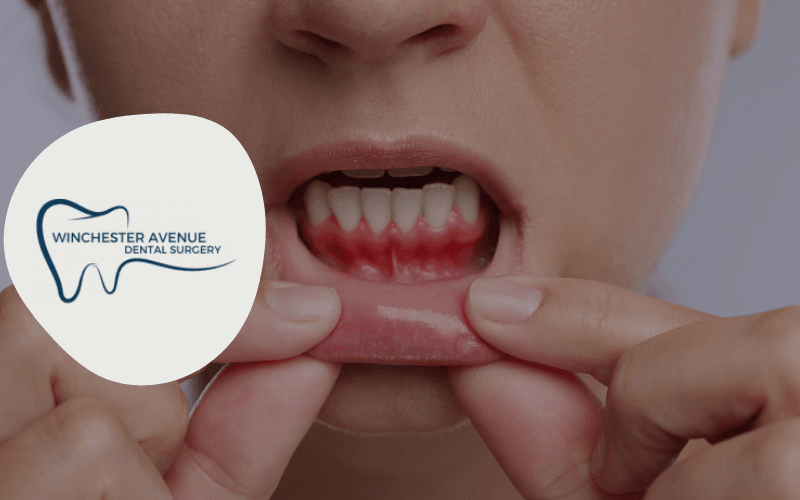
The most common causes of red gingiva
Gingivitis: plaque-driven gingival inflammation
Gingivitis is the most common cause of red gingiva globally and in clinical practice. It is defined as inflammation of the gingival tissue driven by the accumulation of dental plaque at and below the gum margin, in the absence of attachment loss or bone destruction.The mechanism is well established. Gram-negative anaerobic bacteria in mature plaque produce lipopolysaccharides (LPS) and other toxins that penetrate the sulcular epithelium. The immune response to these toxins produces the vascular changes: increased blood flow, vasodilation, and vascular congestion that give the tissue its red, oedematous appearance.The clinical features of gingivitis-induced red gingiva:- Red, swollen tissue most prominent at the gum margin and interdental papillae
- Bleeding on gentle probing or with light brushing
- Smooth, shiny surface (stippling lost)
- Tenderness of the margin when touched
- Possible bad breath from the accumulation of bacterial metabolic products
Periodontitis: when the inflammation goes deeper
If gingivitis is not effectively treated, the bacterial infection can extend beyond the gum tissue into the deeper periodontal structures: the periodontal ligament, cementum and alveolar bone. This is periodontitis, and while the gingiva may still appear red and inflamed, the underlying destruction is no longer confined to the visible tissue.In periodontitis, the distinguishing clinical features alongside the red gingiva are:- Pockets deeper than 3mm on probing
- Bleeding on probing from the base of the pocket, not just the margin
- Bone loss visible on X-ray
- Possible gum recession as the bone resorbs beneath
- In more advanced cases, tooth mobility
Hormonal influences on gingival appearance
The gingiva is highly responsive to hormonal changes, and red, swollen gingival tissue in the absence of significant plaque accumulation is a recognised feature of several hormonal states.Pregnancy gingivitis. Elevated progesterone during pregnancy increases the vascularity of the gum tissue and alters the local immune response, producing an exaggerated inflammatory reaction to even modest amounts of plaque. The gingiva becomes red, swollen, and bleeds very readily. A pregnancy epulis (a localised soft tissue overgrowth, typically appearing as a red, pedunculated lesion between two teeth) is a related presentation. Both conditions are typically managed with professional cleaning and improved home care during pregnancy, and often improve or resolve after delivery.Puberty-associated gingivitis. The hormonal surge of puberty produces a similar amplified gingival response to plaque. Red, oedematous gingiva in teenagers beyond what their plaque levels would typically explain is a well-recognised clinical presentation.Menstrual cycle changes. Some women notice cyclical gingival redness and sensitivity corresponding to specific hormonal phases, typically in the days before menstruation.Medication-induced gingival changes
Several categories of medication alter the gingival appearance in clinically significant ways.Calcium channel blockers (amlodipine, nifedipine) and anticonvulsant drugs (phenytoin) and immunosuppressants (ciclosporin) cause gingival overgrowth in susceptible patients: the tissue enlarges, becomes red and bulbous, and the overgrowth is worsened by the presence of plaque. The redness reflects both the inherent colour change of enlarged tissue and the secondary inflammation driven by the plaque that accumulates in the areas of overgrowth.Blood thinners (warfarin, apixaban, aspirin) do not cause gingival redness directly, but they prolong and intensify bleeding from already-inflamed tissue, making the redness more apparent.Identifying medication-induced gingival changes is clinically important because the management approach differs: optimising oral hygiene reduces the secondary inflammatory component, but the primary overgrowth does not fully resolve without addressing the causative medication, which requires discussion with the prescribing clinician.Systemic conditions that present with red gingiva
A number of systemic conditions use the gum tissue as an early or prominent site of clinical expression:Diabetes mellitus. Poorly controlled blood glucose impairs neutrophil function, the primary immune cells responsible for fighting the bacteria driving gum disease. This means diabetic patients with inadequate glycaemic control develop more severe and more rapidly progressing gingival inflammation and bone destruction than non-diabetic patients with equivalent plaque levels.Vitamin C deficiency (scurvy). Vitamin C is essential for collagen synthesis, and collagen is the structural basis of the periodontal tissues. Deficiency causes the gingival collagen to degrade, producing spongy, bright red, friable gingival tissue that bleeds with the slightest touch. Classic scurvy is rare in the UK, but moderate vitamin C insufficiency is more common than recognised, particularly in elderly patients and those with restricted diets.Leukaemia. Acute leukaemia, particularly acute monocytic leukaemia (AML-M5), produces gingival infiltration with leukaemic cells, causing dramatic gingival enlargement, redness, and spontaneous bleeding. The gingival changes may be among the first presenting features of undiagnosed leukaemia.Desquamative gingivitis. This is a clinical description rather than a specific disease: it refers to red, painful, friable gingival tissue with a peeling or desquamating surface. It is most commonly associated with lichen planus, mucous membrane pemphigoid, and pemphigus vulgaris. These are autoimmune mucosal conditions requiring specialist referral and specific management.Viral infections affecting the gingiva
Primary herpetic gingivostomatitis. The first clinical episode of herpes simplex virus type 1 infection in children (and occasionally adults) produces generalised acute inflammation of the gingiva: intensely red, swollen, painful gum tissue associated with painful vesicles (blisters) that rupture to form ulcers on the gingiva, lips, cheeks and palate. The patient is systemically unwell, with fever and enlarged lymph nodes. This is a self-limiting condition that resolves within one to two weeks, managed with supportive care and, in severe cases, antiviral medication.Pericoronitis: localised red gingiva around wisdom teeth
Pericoronitis is acute inflammation of the gum tissue surrounding a partially erupted wisdom tooth. The operculum (the gum flap over the partially erupted crown) traps food debris and bacteria, producing an acute localised infection. The gingiva around the affected tooth is intensely red, swollen, and extremely tender. There may be limited mouth opening, pain on swallowing, and if the infection is spreading, facial swelling and fever.Pericoronitis requires urgent professional assessment. The acute episode is managed with irrigation beneath the operculum, antibiotics where infection is spreading, and appropriate pain relief. Recurrent pericoronitis is an indication for surgical removal of the wisdom tooth.Necrotising ulcerative gingivitis: the acute emergency
Acute necrotising ulcerative gingivitis (ANUG) produces intensely red, painful gingival tissue with characteristic punched-out ulceration of the interdental papillae, a grey necrotic slough, extreme halitosis, and sometimes systemic symptoms. This is a genuine dental emergency driven by a specific polymicrobial infection in the setting of immune compromise (often stress, smoking, poor nutrition or HIV).ANUG needs same-day professional treatment. At Winchester Avenue Dental Surgery, emergency appointments seven days a week for £40 provide immediate assessment and the debridement, antimicrobial therapy and analgesia that ANUG requires.What a clinical assessment of red gingiva involves
When red gingiva is assessed at a dental check-up, the examination works systematically through the features that differentiate the causes:- Distribution. Is the redness localised to one area (suggesting a localised cause: pericoronitis, abscess, trauma) or generalised across the whole mouth (suggesting a systemic or plaque-driven cause)?
- Pocket depth measurement. A periodontal probe placed into the sulcus around each tooth measures the depth to the base of the pocket. Normal is 1 to 3mm. Deeper pockets indicate periodontitis and direct the treatment approach.
- Bleeding pattern. Bleeding only at the gum margin when lightly probed indicates gingivitis. Bleeding from deeper within a pocket indicates periodontitis. Spontaneous bleeding without any stimulus is a more serious sign.
- Radiographic assessment. X-rays reveal bone levels around the teeth, identifying bone loss associated with periodontitis that is not visible clinically. They also show periapical pathology (abscess formation) that can manifest as red, swollen gingiva without obvious tooth pain in some presentations.
- Medical history. Any conditions, medications or life changes that could explain the gingival presentation are explored. New medications, pregnancy, recent illness, and changes in blood glucose control are all relevant.
When red gingiva needs emergency care
Most cases of red gingiva can be assessed at a routine appointment without urgency. The following require same-day professional attention:- ANUG presentation: severe, rapidly developing gum pain with punched-out ulceration, necrotic slough and extreme halitosis.
- Pericoronitis with spreading infection: facial swelling, difficulty opening the mouth, difficulty swallowing, fever alongside localised gum redness.
- A dental abscess producing localised red swelling: particularly if the swelling is increasing rapidly or is accompanied by systemic symptoms.
- Spontaneous, difficult-to-control gum bleeding: particularly in patients without a known history of gum disease, where this could indicate a systemic haematological condition requiring investigation.
The connection between red gingiva and overall oral health
Red gingiva that persists through or beyond treatment is, in some patients, an early indicator of generalised oral health decline that extends beyond the gum tissue itself. Untreated periodontal disease produces progressive bone loss that is the leading cause of tooth loss in adults. Where bone loss has been significant enough to require extraction of multiple teeth, dentures are one of the replacement options available at Winchester Avenue Dental Surgery.All treatment fees, including those for periodontal treatment, check-ups and emergency appointments, are available on our prices page before any commitment is made.In conclusion
Red gingiva is a clinical sign that the gum tissue is under challenge. In the majority of cases, that challenge is bacterial plaque, and the response to appropriate professional cleaning and improved home care is resolution of the redness and return to healthy tissue. In a minority of cases, the redness signals a systemic condition, medication effect, hormonal change or acute infection that needs a different clinical response.A proper dental check-up that includes periodontal assessment, soft tissue examination and relevant X-rays distinguishes between these causes and directs the appropriate treatment. Where the presentation is acute and painful, the emergency dental service at Winchester Avenue Dental Surgery provides same-day assessment for £40, seven days a week.Disclaimer
The information in this article is intended for general educational guidance only and does not constitute personalised dental or medical advice. Red gingiva can have many causes, some of which are medically significant. For an accurate diagnosis, please book an appointment with a qualified dental professional.Winchester Avenue Dental Surgery is a private dental practice in Leicester, led by Dr Zeinab. We offer dental check-ups, emergency dental appointments seven days a week for just £40, dentures, Invisalign, composite bonding, porcelain veneers, teeth whitening and dental crowns. View all treatment fees at our prices page.Frequently asked questions
Is red gingiva always a sign of gum disease?
Red gingiva is most commonly associated with gingivitis or periodontitis, both driven by bacterial plaque, but it is not exclusively a sign of gum disease. Hormonal changes during pregnancy or puberty produce red, oedematous gingival tissue in the absence of significant plaque accumulation. Certain medications cause gingival overgrowth that presents as red, enlarged tissue. Systemic conditions including diabetes, vitamin deficiencies, leukaemia and autoimmune conditions can all produce gingival redness as part of their presentation. A dental check-up with appropriate examination establishes the specific cause.
Can red gingiva resolve on its own without treatment?
If the cause is simple gingivitis from recent plaque accumulation (for example, a patient who has been less diligent about brushing for a few weeks due to illness), improved home care can allow the tissue to return toward normal. However, established gingivitis with tartar below the gum line, periodontitis with deeper pockets, and any of the systemic or medication-related causes of red gingiva do not resolve without professional intervention. The safest approach when gingiva has been red for more than a week or two is professional assessment at a dental check-up.
What is the difference between red gingiva from gingivitis versus from periodontitis?
In gingivitis, the redness and inflammation are confined to the gum tissue itself: the attachment between the gum and the tooth root is not compromised, and no bone has been lost. In periodontitis, the inflammation has extended deeper into the periodontal structures, producing pocket formation, bone loss and sometimes recession. Both present with red, bleeding gingiva, but periodontitis is distinguished by deeper pockets on probing and bone loss visible on X-ray. This distinction matters clinically because periodontitis requires more involved treatment and has permanent structural consequences that gingivitis does not.
My gums are red and painful and I have a swelling. Should I go to A&E?
If the swelling is spreading toward your jaw, neck, or eye, or if you have difficulty swallowing or breathing alongside gum pain and swelling, this warrants emergency medical attention: these are signs of spreading dental infection that can become life-threatening. For acute gum pain and swelling that is localised to the mouth without these features, the emergency dental service at Winchester Avenue Dental Surgery is the appropriate first step, available seven days a week for £40.
Red gingiva appeared suddenly and is very painful. What might this be?
Sudden onset of severe gingival pain with very red tissue should be assessed the same day. The most clinically significant causes of acute onset red, painful gingiva are acute necrotising ulcerative gingivitis (ANUG), pericoronitis around a wisdom tooth, and a localised dental abscess. Each requires different treatment. All require professional assessment promptly: book an emergency appointment at Winchester Avenue Dental Surgery for same-day care.