

Broken denture? What to do now and how it can be repaired
It usually happens at the worst moment. You drop your denture in the sink, bite into something hard, or notice a crack running down the middle of the plate. Suddenly you can't eat properly, you feel self-conscious smiling, and you're wondering whether it can be fixed or whether you'll need a whole new set.A broken denture is one of the most stressful things that can happen to a denture wearer, but it's also one of the most fixable. At Winchester Avenue Dental Surgery in Leicester, our team led by principal dentist Dr Zeinab sees broken and damaged dentures regularly, and most can be repaired rather than replaced.This guide explains what to do straight away, which types of breaks can be fixed, how long repairs usually take, and how to stop it happening again.
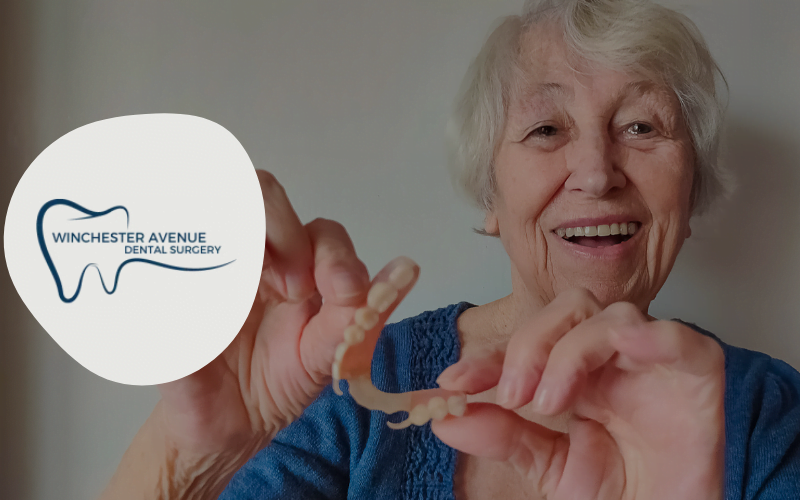
The first 24 hours: what to do and what to avoid
Do:- Collect every piece, including any teeth that have come off and small fragments. Put them in a clean bag or container and bring them with you
- Take the denture out if it has a sharp or jagged edge, so it doesn't cut your gums, tongue or cheek
- Rinse your mouth with warm salt water if your gums feel sore
- Stick to soft foods such as soup, eggs, yoghurt, mashed potato and fish
- Book to see a dentist. An emergency appointment means we can assess the damage quickly and get the repair under way
- Don't use superglue or any household glue (more on why below)
- Don't try to file down sharp edges or bend metal clasps yourself
- Don't keep wearing a denture that's rubbing or cutting your mouth. It can cause painful ulcers
- Don't put the denture in hot water to try to reshape it, as this can warp it permanently
Why you should never superglue a denture
It's tempting. The glue's in the drawer and you need to eat. But superglue causes far more problems than it solves:- It isn't safe for your mouth. Household glues aren't designed to be in contact with your gums and can irritate or burn soft tissue
- It changes the fit. Even a thin layer of glue can stop the pieces lining up exactly, so the denture no longer sits properly. A badly fitting denture rubs, causes sores and puts extra stress on the plate, making it more likely to break again
- It makes a proper repair harder. A dental technician has to remove the glue before repairing the denture, and sometimes it damages the edges so badly that the denture can't be repaired at all
- It doesn't last. Glue isn't built to cope with the moisture and chewing forces in your mouth
What kind of break is it?
The type of damage makes a big difference to how it's fixed and how quickly. Here's a general guide.| Type of damage | What you'll notice | Can it usually be repaired? | Typical timescale |
|---|---|---|---|
| A tooth has come off the denture | A gap in your smile; the tooth may be intact | Yes, the tooth can often be reattached or replaced | Often quick, sometimes within a day or two |
| Crack in the plate | A visible line, often down the middle of an upper denture | Usually, if caught early | Usually a few days |
| Plate broken into pieces | The denture has snapped completely | Often, especially if all pieces are kept | Usually a few days |
| Broken clasp on a partial denture | The metal arm that grips your tooth has snapped or bent | Usually; may need a new clasp | A few days |
| Broken metal (chrome) framework | Damage to the metal base of a partial denture | Sometimes; depends on where it's broken | Can take longer |
| Loose or wobbly denture | Not broken, but rocks, drops or rubs | Often improved with a reline | Usually a few days |
Repair, reline or replace?
When you bring in a broken denture, there are usually three options. Which one's right depends on the age and condition of the denture and how well it fitted before it broke.Denture repair
If the denture is in good condition overall and fitted well, a straightforward denture repair is usually the quickest and most cost-effective option. The pieces are joined or the missing tooth is replaced, and the denture is checked and adjusted before you take it home.Reline
Over time, the bone and gums in your mouth gradually shrink, especially after teeth have been removed. This means a denture that fitted perfectly a few years ago can start to rock or feel loose. A reline adds a new layer to the fitting surface of the denture so it matches the current shape of your mouth.A loose denture is under more strain when you chew, which is one of the most common reasons dentures crack. So if yours broke and had been feeling loose, we may suggest a reline at the same time as the repair.A new denture
Sometimes a new denture is the better long-term option, for example if:- The denture is more than five to ten years old and the teeth are worn flat
- It has been repaired several times already
- It never fitted comfortably
- The break is in a place that's hard to repair well
- Your mouth has changed a lot, perhaps because you've lost more teeth
Looking after your denture so it lasts
A few simple habits can make a big difference:- Clean over a folded towel or a sink half-full of water, so it lands softly if you drop it
- Brush your denture daily with a soft brush and a denture cleaner or mild soap, not regular toothpaste, which can scratch it
- Soak it overnight in water or a denture-cleaning solution, never hot water
- Take it out at night to give your gums a rest, unless your dentist has advised otherwise
- Keep it in a container when it's out of your mouth, away from pets and children
- Don't ignore a loose or rubbing denture. Small adjustments early on prevent bigger problems later
- Have regular check-ups, even if you have no natural teeth left
Sore spots and ulcers: when to get them checked
A broken or poorly fitting denture can rub and cause painful sore patches or ulcers. Most heal within a week or two once the denture is repaired or adjusted.But any ulcer, red or white patch, or lump in your mouth that hasn't healed within three weeks should always be checked by a dentist or doctor, whatever you think caused it. It's usually nothing serious, but it's important to rule out anything that needs further investigation. You can have this looked at during a routine check-up or, if it's painful, at an emergency appointment.Tired of dentures moving or breaking?
If you've had several broken dentures, or your denture never feels secure, it may be worth asking about other options. Dental implants can be used to replace individual teeth or to anchor a denture firmly in place, so it doesn't slip or rock when you eat and speak. Implant-supported dentures are also under less strain, which can make them less likely to crack.Implants aren't right for everyone, and they involve more time and investment than a standard denture. But for many people they make a real difference to comfort and confidence, so it's worth talking through at your next appointment.What happens when you come in
If you book an emergency dental appointment for a broken denture, here's what to expect.- We look at the denture and your mouth. We'll check the break, the fit and any sore areas on your gums
- We explain your options. Repair, reline or new denture, with the pros, cons and costs of each
- We smooth any sharp edges so you're comfortable in the meantime
- We arrange the repair and let you know when it'll be ready
- We check the fit when you collect it, making small adjustments so it sits comfortably
Why patients in Leicester choose Winchester Avenue
Winchester Avenue Dental Surgery is a private dental practice at 34 Winchester Avenue, Leicester, LE3 1AU, led by principal dentist Dr Zeinab. We focus on getting people out of pain and back to normal quickly, with emergency appointments available every day of the week.We've received well over 1,000 reviews from patients who came to us needing urgent help, and what they mention most is being seen quickly, being treated kindly, and knowing exactly what things would cost. That matters even more with a broken denture, when it affects how you eat, speak and feel about your smile.This article is for general information and isn't a substitute for an examination by a dentist. If your denture is broken or uncomfortable, please get in touch.Disclaimer
The information in this article is intended for general educational guidance only and does not constitute personalised dental or medical advice. Red gingiva can have many causes, some of which are medically significant. For an accurate diagnosis, please book an appointment with a qualified dental professional.Winchester Avenue Dental Surgery is a private dental practice in Leicester, led by Dr Zeinab. We offer dental check-ups, emergency dental appointments seven days a week for just £40, dentures, Invisalign, composite bonding, porcelain veneers, teeth whitening and dental crowns. View all treatment fees at our prices page.Frequently asked questions
Can a broken denture be fixed?
In most cases, yes. Cracked plates, snapped dentures and missing teeth can usually be repaired by a dental technician, especially if you keep all the pieces. If the denture is very old, has been repaired several times or never fitted well, a new denture may be the better option.
How long does a denture repair take?
Simple repairs, such as reattaching a tooth, can often be done quickly, sometimes within a day or two. More complex repairs, relines and metal framework repairs can take longer. We'll give you a clear timescale when we assess your denture.
Can I use superglue to fix my denture?
No. Superglue isn't safe to use in your mouth, it can change how the denture fits, and it often makes a proper repair harder or even impossible. If you need a short-term fix, a denture repair kit from a chemist is safer, but you should still see a dentist as soon as you can.
Why does my denture keep breaking in the same place?
A denture that keeps cracking in the same spot is usually under uneven pressure, often because it no longer fits your gums properly. A reline or a new denture can solve the underlying problem rather than just fixing the crack.
How much does a broken denture repair cost?
It depends on the type of damage and whether a reline or new denture is needed. Our emergency consultation is £40, and the costs of repairs and new dentures are listed on our prices page. We'll always confirm the cost before starting any work.