

Rotten teeth: what is actually happening inside the tooth, what can be done, and why acting sooner always costs less
The phrase rotten teeth is not a clinical term, but it is a deeply human one. It describes what decay looks like and feels like from the inside of the experience: a tooth that has broken down, that is dark or missing pieces, that hurts, or that you already know needs attention but have been putting off addressing.If that describes your situation, this article is for you — not to lecture, but to give you an honest and complete picture of what is happening clinically, what the options are at different stages of the problem, and what treatment actually looks like so that walking into an appointment does not feel like walking into the unknown.At Winchester Avenue Dental Surgery in Leicester, led by Dr Zeinab, our principal dentist, rotten teeth are one of the most common reasons patients come to us, both at routine check-up appointments and as emergency presentations. With over 1,000 reviews from patients who came to us in pain and left with relief, we understand what this feels like. Here is what you need to know.
What rotten teeth actually means clinically
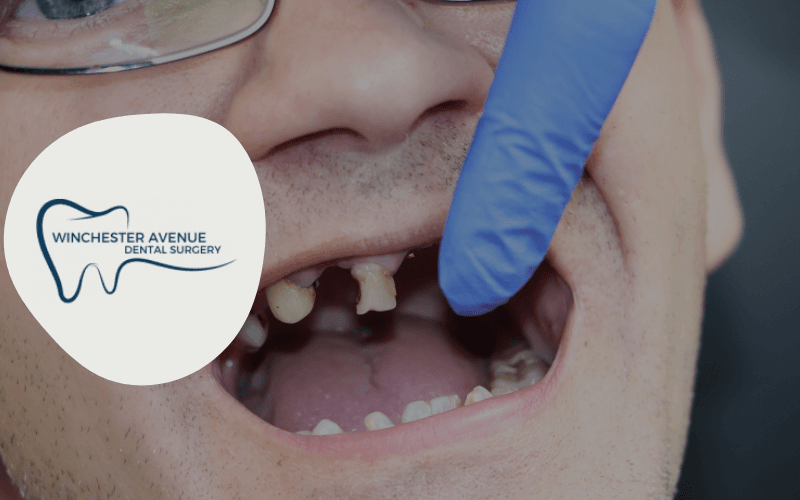
Tooth decay, the clinical process behind what most people call rotten teeth, is caused by the acid produced when bacteria in dental plaque ferment dietary sugars. This acid demineralises the tooth surface progressively, working outward to inward through the enamel and dentine layers toward the pulp at the centre of the tooth.The progression follows a consistent pattern, and where a tooth sits in that progression determines everything about what treatment is needed:- Stage 1: Early demineralisation. The enamel surface softens slightly but no cavity has formed yet. Appears as a white spot lesion. This stage is reversible with fluoride and dietary improvement.
- Stage 2: Enamel cavity. Decay has breached the enamel but not yet reached the dentine beneath. The tooth typically feels no pain because enamel has no nerve supply. A small filling resolves this completely.
- Stage 3: Dentine involvement. The decay has entered the dentine, which is softer and more porous than enamel. Sensitivity to sweet foods, cold and sometimes heat begins. A filling is still the appropriate treatment, though the preparation is deeper.
- Stage 4: Pulp involvement. The decay has reached the nerve. Significant pain, sometimes spontaneous and throbbing. Root canal treatment or extraction becomes necessary at this stage.
- Stage 5: Abscess formation. The infected pulp has spread through the root into the surrounding bone. Severe pain, possible facial swelling, fever. This is a dental emergency that needs same-day treatment.
Why rotten teeth develop: what actually causes the breakdown
Decay is not simply a consequence of bad oral hygiene. Multiple factors contribute, and understanding them helps explain why some people develop significant decay despite caring for their teeth, while others with apparently chaotic habits develop relatively little.Sugar frequency, not volume. Every time sugar enters the mouth, the bacteria in plaque produce acid and the oral pH drops. The mouth takes approximately 30 to 40 minutes to return to a neutral pH through the buffering effect of saliva. A person who drinks three cups of sugary tea over the course of a day with 20 minutes per cup is creating multiple prolonged acid episodes. A person who eats a large sweet dessert at one sitting creates a single acid episode, then recovery. Total sugar consumed may be similar; the dental impact is very different.Inadequate plaque removal. Plaque that is not disrupted by brushing and interdental cleaning matures into a more pathogenic biofilm. The bacteria in mature, undisturbed plaque are more virulent and produce more acid than those in recently disrupted plaque. This is why technique and consistency of cleaning matter as much as frequency.Dry mouth. Saliva is the oral environment's primary maintenance system: it neutralises acid, remineralises softened enamel, and delivers antimicrobial proteins to the gum tissue and tooth surfaces. Patients with significantly reduced saliva flow, whether from medications, systemic disease, or dehydration, develop decay far faster than those with normal salivary flow. Over 400 commonly prescribed medications list dry mouth as a side effect, making this a remarkably common contributing factor that is often missed.Genetics. Enamel thickness, saliva composition, and the specific bacterial species that colonise the oral environment all have hereditary components. Some patients are genuinely more susceptible to decay than others through factors entirely beyond their control.Medical conditions. Acid reflux (GORD) brings stomach acid into the mouth repeatedly, eroding enamel and making the tooth surface more vulnerable to bacterial acid attack. Eating disorders involving frequent vomiting create the same mechanism. Cancer treatment, particularly chemotherapy and head and neck radiotherapy, dramatically alters the oral environment and dramatically increases decay risk.The hygienist's role in preventing and managing rotten teeth
This is a critical section for anyone who has experienced rotten teeth or who is trying to prevent them, because the dental hygienist appointment is not simply a cleaning session. It is a clinical intervention that addresses several of the factors that drive decay directly.Professional tartar removal. Tartar (calculus) is mineralised plaque that cannot be removed by brushing, regardless of technique. It provides the bacterial habitat that drives both gum disease and, at the gum margin, root surface decay. The dental hygienist at Winchester Avenue removes all supragingival and subgingival tartar using ultrasonic and hand instruments, restoring the clean tooth surface that home care maintains between appointments.Fluoride application. Professional fluoride treatments applied during hygienist appointments deliver concentrated fluoride to the enamel surface in a way that toothpaste cannot replicate. This supports remineralisation of early decay lesions and strengthens the enamel surface against future acid challenge. For patients with dry mouth or high decay risk, this is clinically significant.Fissure sealants and preventive applications. The hygienist appointment identifies areas of particular vulnerability, including deep fissures (grooves) on the biting surfaces of back teeth where bacteria shelter from brushing, and the early white spot lesions of pre-cavity decay that are still reversible at this stage.Personalised home care instruction. The most consistent finding in dental hygiene practice is that patients are not cleaning the areas they think they are cleaning. A dental hygienist appointment identifies exactly which areas of your mouth have the most plaque accumulation and provides specific, practical instruction on how to reach them more effectively.For patients who already have rotten teeth from previous neglect and are now committed to prevention, regular hygienist appointments at three to four monthly intervals during the initial period of improved oral health dramatically reduce the likelihood of further decay developing.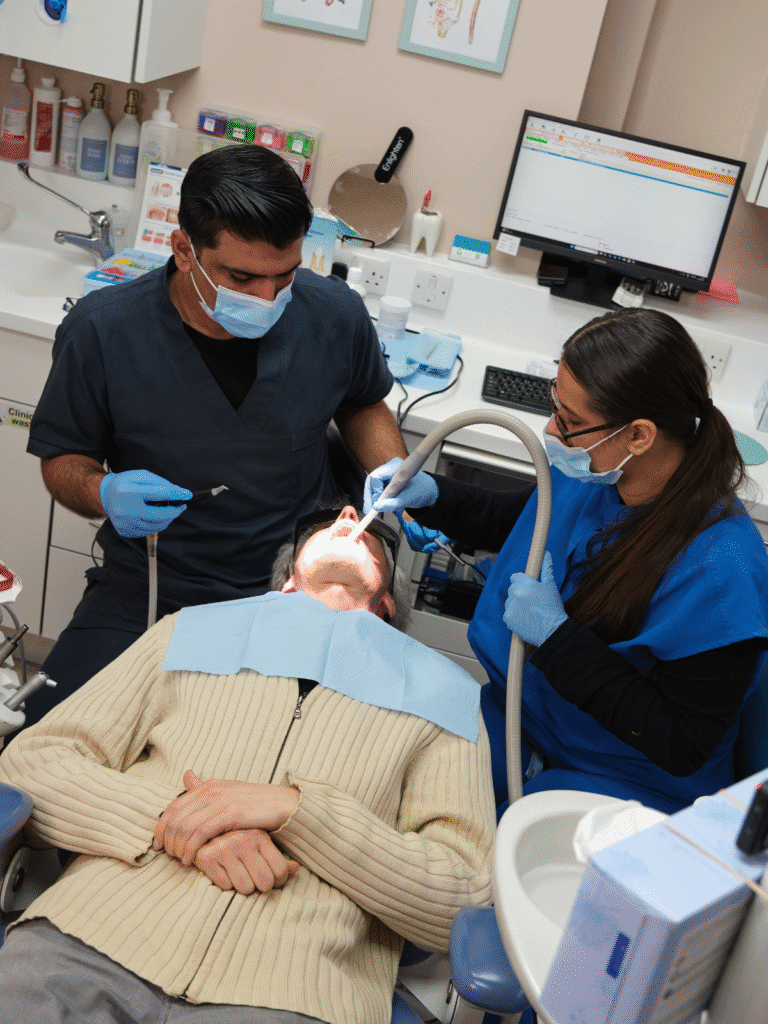
Can rotten teeth be saved? The honest clinical answer
This depends on how far the decay has progressed and how much sound tooth structure remains. The clinical question is not whether the tooth is rotten, but whether sufficient tooth structure above the gum line remains to support a restoration.In most cases, yes. Even teeth that look significantly damaged can often be saved with a combination of root canal treatment and a crown. The decay is removed, the infected pulp is addressed, the canals are cleaned and sealed, and a crown placed over the remaining tooth structure gives it full function and protection.In some cases, no. Where decay has destroyed the tooth below the gum line, where vertical root fractures have occurred alongside the decay, or where the bone loss from associated gum disease has left insufficient support, extraction is the appropriate clinical recommendation.Where extraction is necessary, the conversation about tooth replacement starts immediately. The bone that held the tooth root begins resorbing within weeks of extraction, and the adjacent teeth begin drifting into the gap. Options including dental implants, bridges, and dentures are discussed at the same appointment as the extraction, so no time is lost and the patient understands the full picture.At Winchester Avenue Dental Surgery, dentures start from a highly accessible price point, and the full range of treatment fees is available on our prices page before any commitment is made.The treatment sequence: what actually happens when you finally go
This is where the abstract becomes concrete. Patients with significant decay often delay attending because they do not know what they will face. Here is what actually happens.The assessment. An examination of every tooth with a dental probe, X-rays to assess the depth of decay and bone levels, and a discussion of what has been found. Nothing is done at this appointment without your understanding and agreement. The check-up appointment produces a clear, honest picture and a treatment plan with associated costs.Prioritising by urgency. Teeth causing acute pain or infection are addressed first. Teeth with progressing but not yet painful decay are treated next. Stable findings are monitored. Nothing is done in an arbitrary order: the sequence is determined by clinical need.Pain control throughout. Every procedure is carried out under local anaesthetic. The anticipation of pain is almost always considerably worse than the experience of modern dental treatment under adequate anaesthesia. If you felt pain at a previous dental appointment, that is more likely a reflection of historical technique than the current standard.Restoring function and aesthetics. Once the disease is addressed, the mouth can be restored: broken-down teeth built back up, gaps replaced, discolouration treated. The clinical foundation must be sound first; the aesthetic work follows.When rotten teeth become a dental emergency
Some presentations of rotten teeth cross from urgent-but-deferrable into same-day emergencies:Severe, uncontrolled pain that does not respond to the maximum combined dose of ibuprofen and paracetamol.Visible facial swelling alongside dental pain, particularly if it is spreading toward the jaw or neck.Difficulty swallowing or opening the mouth, alongside dental pain and swelling. This requires same-day care and, if severe, A&E attendance.A bad taste alongside the pain, suggesting an abscess is draining.Fever alongside dental pain, indicating the infection has a systemic component.At Winchester Avenue Dental Surgery, emergency appointments are available seven days a week for just £40 for the consultation. With over 1,000 reviews from patients who attended in pain and left with relief, our emergency service exists precisely for these moments. Dr Zeinab and the team treat every emergency presentation with the urgency it requires.The "I have not been for years" conversation
Patients with significant rotten teeth are often patients who have not attended the dentist for a long time, frequently because of anxiety about the anticipated reaction to what has developed.There is no lecture. There is no comparison of what things would have looked like if attended earlier. The response at Winchester Avenue is practical: here is what is present, here is what can be done, here is the sequence in which it is best addressed. The team has seen every degree of dental neglect, and the clinical response is always the same: honest assessment, clear options, no judgement.In conclusion
Rotten teeth develop progressively from small beginnings. The early stages are treatable with fillings. The later stages require more involved treatment. The end stages may require extraction. At every point, the sooner the situation is addressed, the simpler the treatment and the better the outcome.The role of the dental hygienist in preventing rotten teeth from developing or recurring is substantial and consistently underestimated: professional tartar removal, fluoride application, personalised home care guidance and early lesion identification are all part of what a hygienist appointment at Winchester Avenue delivers.Whether you need a routine check-up to establish where things are, an emergency appointment because something cannot wait, or information about denture options following extractions, Winchester Avenue Dental Surgery is here seven days a week. View all treatment fees at our prices page.Disclaimer
The information in this article is intended for general guidance only and does not constitute personalised dental or medical advice. For concerns about tooth decay or dental pain, please book an appointment with a qualified dental professional for a proper clinical assessment.Winchester Avenue Dental Surgery is a private dental practice in Leicester, led by Dr Zeinab. We offer routine dental check-ups, dental hygienist appointments, emergency dental appointments seven days a week for just £40, dentures, Invisalign, composite bonding, porcelain veneers, teeth whitening and dental crowns. View all treatment fees at our prices page.Frequently asked questions
Can a rotten tooth fix itself?
Only in its very earliest stage: a white spot lesion, before any cavity has formed, can remineralise with fluoride and dietary improvement. Once a cavity has formed, the physical destruction of enamel and dentine does not reverse on its own. The decay continues to progress, and without treatment the tooth eventually loses its pulp to infection, then the supporting bone, and ultimately the tooth itself. A dental check-up with X-rays establishes exactly what stage the decay is at and what treatment is appropriate.
Why do my teeth keep rotting even though I brush regularly?
Brushing alone does not address the interdental spaces where most early decay develops, and it does not remove tartar that has already formed. If dry mouth is a factor, inadequate salivary protection means bacteria and acids act on the enamel with less resistance. Diet (particularly the frequency of sugar or acid exposure), genetic susceptibility and, in some cases, underlying medical conditions all affect the rate of decay independently of brushing habits. A dental hygienist assessment identifies which specific areas are affected and why, and provides personalised guidance that addresses your individual risk factors.
Is it ever too late to treat rotten teeth?
In most cases, treatment is possible regardless of how advanced the decay appears. Even teeth that look significantly damaged can often be saved with root canal treatment and a crown. The clinical question is how much sound tooth structure remains above the gum line. Where a tooth genuinely cannot be saved, dentures and other tooth replacement options are discussed as part of the same appointment so the patient has a complete picture before any decision is made.
How much does treatment for rotten teeth cost?
The cost depends entirely on what treatment is needed, which is established at the assessment appointment. Winchester Avenue Dental Surgery provides a complete, transparent treatment plan with associated costs before any work begins. Emergency consultations are £40. All other fees are available on our prices page. There are no hidden costs and nothing is done without your explicit agreement.
I am embarrassed about how bad my teeth are. Will I be judged?
No. This concern keeps more people away from the dentist than pain does, and it deserves a direct, honest answer: the clinical team at Winchester Avenue has seen every possible degree of dental deterioration and the response is always practical rather than critical. The conversation is about what is there and what can be done, not about how things got this way. Dr Zeinab and the team understand that the patients who come in with the most significant dental problems are often the ones who needed the most support in getting there, and they are welcomed accordingly.