

False teeth: what the options are, how they work, and what to expect at every stage
False teeth is one of those phrases that covers a broader range of options than most people initially realise. When people say false teeth, they often mean dentures, the removable replacements for missing teeth that have been a part of dentistry for centuries. But the term genuinely applies to any tooth replacement that is not the patient's original natural tooth: fixed bridges, implant-supported crowns, implant-retained dentures, and partial plates all fall under this description.The options available today for replacing missing teeth vary significantly in terms of how they work, what they cost, how long they last, how they feel in the mouth, and what the day-to-day experience of living with them is like. Understanding the differences between them is what allows a patient to make an informed choice that actually suits their situation rather than settling for the first thing that is suggested.At Winchester Avenue Dental Surgery in Leicester, led by Dr Zeinab, our principal dentist, we offer a full range of tooth replacement options including dentures starting from just £599 per arch, one of the most accessible price points in Leicester for quality dental prosthetics. Here is the complete guide.
Why false teeth are needed: what happens when teeth are lost
Before looking at the options, it is worth understanding what actually happens in the mouth when teeth are lost, because this gives important context for why some replacement options are clinically superior to others.Bone loss: Every tooth has a root that extends into the jawbone. The mechanical forces transmitted through the root to the bone during biting and chewing signal the body to maintain bone density in that area. When a tooth is lost, those signals stop. The bone that previously surrounded the root begins to resorb, which typically reduces jawbone volume progressively over months and years. This is why long-term denture wearers often need their dentures relined or replaced: the bone beneath has changed shape.Tooth drift: The teeth on either side of a gap drift gradually toward it. The opposing tooth (the one above or below) over-erupts into the space. These changes affect the bite, create new food traps, and make any future tooth replacement more complicated and more expensive.Aesthetic and functional impact: Missing teeth affect chewing efficiency, speech (particularly for front teeth), and facial appearance. The lower third of the face progressively loses support when posterior teeth are absent, contributing to a sunken appearance that ages the face.The importance of acting promptly: For all these reasons, addressing a missing tooth sooner rather than later produces better outcomes and more options. A gap left for years is clinically more complex to restore than the same gap addressed within months of tooth loss.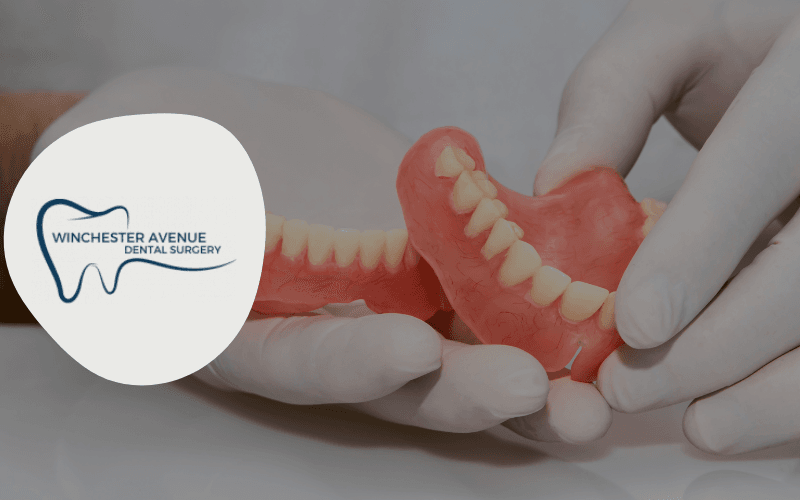
The types of false teeth: a complete breakdown
1. Complete (full) dentures
Complete dentures replace all of the teeth in one or both arches. They are removable, resting on the gum tissue (the ridge left after teeth are extracted), and held in place by suction against the palate for upper dentures and by the shape of the ridge for lower dentures. They are taken out for cleaning and typically removed at night.Who they are for: Patients who have lost all of their natural teeth in the upper arch, lower arch, or both.What they look like: Modern complete dentures are manufactured from acrylic resin with prosthetic teeth set in natural-looking positions. The aesthetics of modern dentures, in skilled hands, are considerably more natural than the stereotypical image of clearly false teeth: shade, shape, size and position of the prosthetic teeth are all customised to suit the patient.The adaptation period: Most patients find the first two to three months with complete dentures require adjustment. The mouth must learn new patterns for speaking, eating and swallowing with the prosthesis in place. Lower dentures in particular are more challenging than upper dentures because the ridge of the lower jaw provides less support for the denture base to sit on.At Winchester Avenue Dental Surgery, complete dentures start from £599 per arch, one of the most competitive fees in Leicester for quality conventional denture provision.2. Partial dentures
Partial dentures replace one or more missing teeth when some natural teeth remain. They typically incorporate clasps or precision attachments that grip onto the remaining natural teeth to provide stability.Types of partial dentures:Acrylic partial dentures are the most affordable option and are sometimes provided as an immediate or transitional denture (placed immediately after extraction while the socket heals and a more definitive replacement is planned). They are functional but less rigid than metal-based options.Chrome cobalt partial dentures have a cast metal framework that is thinner, lighter, more rigid and generally more comfortable than acrylic. The clasps can be designed to minimise visibility. They are more durable than acrylic partials and typically fit more precisely because the material does not flex.Flexible partial dentures (such as Valplast) use a flexible nylon-based material with no visible metal clasps. They are particularly useful for specific situations where aesthetics are the priority and the clasps of a conventional partial would be visible.3. Fixed dental bridges
A dental bridge is fixed false teeth: a tooth-coloured restoration that is cemented permanently to the adjacent natural teeth (the abutment teeth), bridging the gap left by a missing tooth or teeth. Unlike dentures, a bridge is never removed for cleaning: it is cleaned in place using floss threaders or interdental brushes beneath the pontic (the false tooth spanning the gap).Advantages: Fixed and stable; does not need to be removed; provides a natural feel during eating and speaking; generally more comfortable than removable false teeth for most patients.Limitations: The abutment teeth must be prepared (reduced in size) to receive the crowns that anchor the bridge. This preparation is irreversible. If the natural teeth being used as abutments are healthy, some clinicians are reluctant to prepare them, as this represents a permanent reduction in tooth structure. Bridges also do not address the underlying bone loss, because there is no root structure transmitting force into the bone beneath the pontic.Resin-bonded bridges (Maryland bridges) are a more conservative alternative for single-tooth gaps, particularly in the front of the mouth. A metal or ceramic wing is bonded to the back of one or both adjacent teeth without crown preparation. Less invasive but also less stable than conventional bridges.4. Dental implants: the closest to natural teeth
Dental implants are titanium fixtures placed surgically into the jawbone, where they integrate with the bone through osseointegration and then support a crown, bridge or denture above the gum line. They are the only form of false teeth that addresses bone loss rather than simply bypassing it: the mechanical force transmitted through the implant fixture maintains bone density in the same way a natural root does.Single tooth implants replace an individual missing tooth with a crown supported by a single implant fixture. The result looks, feels and functions like a natural tooth, with the gap between the crown and adjacent teeth appearing natural rather than showing the profile of a bridge.Implant-retained dentures use typically two to four implant fixtures per arch to provide secure retention for a removable denture. The denture clips onto locator attachments on the implants, dramatically improving stability compared to conventional dentures and eliminating the need for denture adhesive. This is particularly beneficial for lower dentures, where conventional denture retention is most challenging.Implant-supported bridges use implants to support a fixed bridge replacing multiple consecutive missing teeth, without involving the adjacent natural teeth as abutments.The advantages of implants for long-term false teeth provision are significant: bone preservation, stability, natural function, no impact on adjacent teeth, and a lifespan measured in decades when appropriately maintained.How false teeth are made: the process from assessment to fitting
Understanding the fabrication process is helpful because it explains why several appointments are involved and what is happening at each stage.Assessment and planning: A dental check-up establishes the condition of the remaining teeth and gums, the bone volume available, and what replacement option is appropriate and achievable. X-rays may be taken to assess bone levels and the position of anatomical structures. For implants, a cone beam CT (CBCT) scan provides three-dimensional bone assessment.Impressions: Precise impressions (or digital scans) of the jaw are taken. For dentures, multiple impressions at different stages capture the ridge shape, the bite relationship, and the position of the jaw in space. For fixed restorations, impressions of the prepared abutment teeth and opposing arch are taken.Bite registration: The precise relationship between the upper and lower jaws is recorded so that the teeth can be set or fabricated in the correct occlusal relationship.Trial stages: Dentures go through a trial stage where the teeth are set in wax and the patient can assess the appearance, speech and bite before the final denture is processed. Adjustments to the tooth position and bite are made at this stage.Fitting and adjustment: The completed restoration is fitted and adjusted. For dentures, multiple review appointments typically follow to address pressure sores (areas of the fitting surface that create discomfort against the gum ridge), bite adjustments and overall comfort. It is normal and expected to need adjustments: they are part of the process, not a sign that something has gone wrong.Looking after false teeth: what maintenance involves
Removable false teeth (dentures) should be:- Cleaned twice daily with a soft brush and denture cleaner, not toothpaste (which is abrasive enough to scratch the acrylic surface and create bacterial habitats)
- Rinsed after meals to remove food particles
- Soaked overnight in cold water or a specialist denture solution: keeping dentures moist prevents the acrylic from drying out and distorting
- Stored out of reach of pets, who are attracted to the smell and often cause irreparable damage
- Brought to every dental appointment for assessment and occasional professional cleaning
Attending check-ups with false teeth: why it still matters
A very common misconception is that once a patient has false teeth, there is no longer any reason to attend regular dental check-ups. This is not the case for several reasons.For patients with some remaining natural teeth: Any remaining natural teeth still develop decay and gum disease. False teeth alter the loading of those remaining teeth and can create new areas of plaque accumulation around clasps and margins.For patients with no remaining natural teeth: The soft tissue examination for oral cancer applies to every patient regardless of whether they have natural teeth. The gum ridge beneath a denture, the palate, the cheeks, the tongue and the floor of the mouth all remain at risk of soft tissue changes that need periodic professional assessment. The denture itself is checked for fit, condition and the accuracy of its bite relationship.Denture relines and replacements: Dentures need replacing or relining periodically because the bone ridge beneath them continues to change shape over time. A denture that fitted well three years ago may now be causing soreness, rocking or instability because the ridge has resorbed. Regular dental check-ups allow this to be identified and addressed before it produces significant problems.Emergencies with false teeth
Broken dentures, cracked bridges, loose implant crowns and lost temporary restorations are all dental emergencies that require same-day or next-day assessment. At Winchester Avenue Dental Surgery, emergency appointments are available seven days a week for just £40 for the consultation.With over 1,000 reviews from patients who have relied on our emergency service for exactly these situations, including broken dentures that made eating impossible and lost restorations causing pain, we are here for exactly these moments. All our treatment fees, including denture costs, are available on our prices page.In conclusion
False teeth encompass a wide range of solutions for missing teeth, from complete and partial dentures starting from £599 per arch through to fixed bridges and implant-supported restorations. The right choice depends on the number and position of the missing teeth, the condition of the remaining teeth and gums, the available bone volume, budget, and personal preference for fixed versus removable.What matters most is addressing missing teeth in a timely way, at a practice that understands both the clinical and practical realities of tooth replacement and that will be available when things need immediate attention.At Winchester Avenue Dental Surgery in Leicester, Dr Zeinab leads a team providing comprehensive general and restorative dentistry, with emergency cover seven days a week, transparent pricing and a commitment to making quality dental care accessible to everyone.Disclaimer
The information in this article is intended for general educational guidance only and does not constitute personalised dental advice. For concerns about tooth replacement options suitable for your specific situation, please book an appointment with a qualified dental professional for a proper clinical assessment.Winchester Avenue Dental Surgery is a private dental practice in Leicester, led by Dr Zeinab. We offer dentures from £599 per arch, dental check-ups, emergency dental appointments seven days a week for just £40, Invisalign, composite bonding, porcelain veneers, teeth whitening and dental crowns. View all treatment fees at our prices page.Frequently asked questions
How long do false teeth last?
Lifespan varies considerably by type. Acrylic dentures typically last five to seven years before replacement is needed, though they may need relining sooner as the bone ridge changes. Chrome cobalt partial dentures last longer, often ten years or more. Fixed porcelain bridges have a lifespan of ten to fifteen years or more with good maintenance. Dental implants themselves, when well maintained, are designed to last a lifetime; the crown or denture they support may need replacement after ten to fifteen years. For personalised guidance, a dental check-up at Winchester Avenue Dental Surgery allows an honest assessment of what your current false teeth need.
Are dentures the most affordable type of false teeth?
Conventional dentures have the lowest upfront cost of any tooth replacement option: at Winchester Avenue Dental Surgery, they start from £599 per arch, one of the most competitive fees in Leicester. Over a longer time horizon, the cost comparison changes, because dentures require periodic replacement or relining while implants, despite the higher initial investment, are designed to last indefinitely. For patients for whom upfront affordability is the priority, dentures remain a practical and effective option. Full pricing details are available on our prices page.
Do false teeth look natural?
Modern false teeth, made with current materials and with careful shade and shape selection, look considerably more natural than the aesthetic of older dentures that many patients associate with the term. The key variables are the skill of the clinician and the dental technician in the shade matching and tooth positioning, and the quality of the materials used. At Winchester Avenue Dental Surgery, the same care is applied to achieving a natural appearance as to the functional outcome.
Can I eat normally with false teeth?
With complete dentures, a gradual return to a normal diet is expected over the first few months as the mouth adapts. Very hard or very sticky foods remain challenging for full denture wearers long-term. Partial dentures and bridges allow more normal eating, with some caution around the same food types. Implant-supported restorations, including implant-retained dentures, allow the most normal eating experience because the stability they provide is closest to natural teeth. Specific dietary guidance is provided when false teeth are fitted.
What do I do if my false teeth break?
A broken denture or damaged false tooth is a dental emergency that needs prompt attention. In the short term, dental repair adhesive from a pharmacy can hold a broken denture together temporarily. Do not use conventional household adhesives such as superglue: they are difficult to remove and interfere with professional repair. Contact Winchester Avenue Dental Surgery's emergency dental service for a same-day or next-day appointment. Emergency appointments are available seven days a week for just £40 for the consultation. Many broken dentures can be repaired at the practice the same day; others are sent to the laboratory for repair.