

Can You Eat After a Dental Filling? A Complete Guide to What to Do (and Avoid) After Treatment
You have just had a dental filling and you are wondering two things: when you can eat, and what is safe to eat when you do. It is one of the most common post-treatment questions patients ask — and the answer depends more on the type of filling you have had than most people realise.Can you eat after a dental filling? The short answer is: yes, but the timing and what you eat matters. Get it wrong and you risk damaging the filling, prolonging sensitivity or causing yourself unnecessary discomfort. Get it right and the filling will settle comfortably and serve you well for years.This guide covers everything you need to know — the differences between filling types, exactly when it is safe to eat, what foods to avoid and why, how to manage post-filling sensitivity, and the signs that something is not right and needs checking.At Winchester Avenue Dental Surgery in Leicester, led by Dr Zeinab, our principal dentist, we place dental fillings as part of our comprehensive general dental care, available with check-ups from standard fees and emergency treatment available seven days a week for just £40 for the consultation. Here is everything you need to know about eating after a filling.
The Type of Filling Makes All the Difference
Before answering can you eat after a dental filling, it is essential to know that there are two main types of filling material used in modern dentistry, and the rules for each are different.Amalgam Fillings (Silver Fillings)
Amalgam is a metal alloy — primarily composed of mercury, silver, tin and copper — that has been used in dentistry for over 150 years. Despite the prevalence of white composite fillings today, amalgam is still used in certain clinical situations, particularly for large fillings in back teeth where durability is the priority.How amalgam sets: Amalgam does not cure by chemical reaction in the same way composite does. It undergoes a hardening process that takes time — the surface becomes firm within minutes, but the filling is not at full strength for approximately 24 hours. This is clinically significant for eating: biting on a freshly placed amalgam filling with significant force risks cracking or distorting the material before it has fully hardened.Eating guidance for amalgam:- Avoid eating for at least one hour after placement
- For the first 24 hours, avoid hard, crunchy or very chewy foods on that side
- Try to chew on the opposite side of the mouth during the 24-hour hardening period
- Avoid sticky foods such as chewing gum, toffee or caramels for at least 24 hours — these can pull at the filling before it is fully set
- Avoid very hot or very cold foods in the first 24 hours — amalgam conducts temperature readily, and a newly filled tooth with exposed dentine can be particularly sensitive
Composite Fillings (White or Tooth-Coloured Fillings)
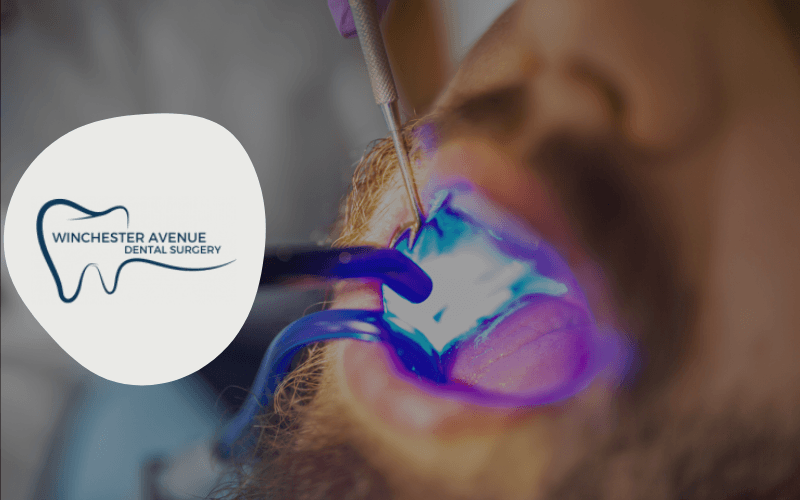
Composite resin is a tooth-coloured material — typically consisting of a resin matrix reinforced with inorganic filler particles — that is placed in layers and cured with a blue LED light. Each layer is hardened immediately when the curing light is applied.How composite sets: This is the crucial difference from amalgam. Composite undergoes photopolymerisation — light-activated curing — which means that by the time you leave the dental chair, the filling is fully hardened. Unlike amalgam, there is no ongoing hardening process after you leave the practice.Eating guidance for composite:- In theory, composite fillings are hard and stable immediately after placement
- In practice, waiting until the local anaesthetic has fully worn off before eating is strongly advised — typically one to two hours after treatment
- The reason is not about the filling's hardness — it is about your inability to feel what you are doing with a numb jaw, which leads to accidental biting of the cheek, lip or tongue
The Most Important Rule: Wait for the Anaesthetic to Wear Off
Regardless of the type of filling, the most important piece of eating advice after a dental filling is this: do not eat until you can feel your mouth properly again.Local anaesthetic numbs not just the tooth being treated but the surrounding gum tissue, the cheek and the tongue on that side. When you try to eat without sensation, several problems can occur:Accidental biting: Without feeling, you cannot reliably judge where your teeth, cheek and tongue are relative to each other. Patients regularly bite the inside of their cheek or tongue while numb — sometimes creating a significant wound that is only discovered when the anaesthetic wears off and the pain begins.Burns from hot food: If you cannot feel temperature in the area, you may not realise that food or drink is too hot until it has already caused a burn to the soft tissue.Incorrect bite feedback: After a filling, it is important to check that the bite feels natural and comfortable — that the new filling is not sitting too high. You cannot assess this properly until sensation is restored. If the filling feels "high" once the anaesthetic wears off, your dentist needs to know so they can adjust it.Local anaesthetic typically wears off within one to three hours depending on the type used, the dose and individual variation. Inferior alveolar nerve blocks — used for lower back teeth — tend to last longer than infiltration anaesthetic used for upper teeth. Some patients find the numbness lingers for closer to three or four hours; others notice it wearing off within an hour.A practical guide: drink a glass of room-temperature water once you are home. If you can feel it clearly on both sides of your mouth, the anaesthetic is wearing off. If one side still feels muffled or different, wait a little longer.What Can You Eat After a Dental Filling?
Once the local anaesthetic has worn off, can you eat after a dental filling in any meaningful sense? Yes — and in most cases, you can eat a fairly normal diet. The key is being sensible about texture and temperature, particularly in the first 24 hours.Foods That Are Safe and Recommended
For the first 24 hours, stick to foods that are:- Soft and require minimal chewing: Scrambled eggs, yoghurt, soup, pasta, mashed potato, fish, avocado, soft cooked vegetables, bananas, smoothies
- At room temperature or lukewarm: Avoiding extremes of hot and cold minimises sensitivity
- Not sticky: Anything that could pull at the filling — caramel, toffee, chewing gum, sticky sweets, dried fruit — should be avoided
- Not hard or crunchy: Crisps, crusty bread, raw carrots, nuts, crackers and anything that requires significant biting force should wait until the filling has fully settled
Foods to Avoid
Hard foods: The concern with hard foods immediately after a filling is less about damaging a composite filling (which is already fully cured) and more about a tooth that may be slightly sensitive following treatment. A tooth that has just had its decay removed and a filling placed has exposed dentine that takes time to settle. Hard foods that require substantial bite force can aggravate this sensitivity.Sticky foods: For amalgam fillings, the concern is mechanical — sticky food can pull at a filling that is still in its hardening phase. For composite fillings, sticky food is not going to dislodge the restoration, but it is worth avoiding temporarily for the simple practical reason that a just-filled tooth may be more sensitive than usual.Very hot and very cold foods: Temperature sensitivity is one of the most common post-filling complaints. The tooth has had work done — even a straightforward filling involves removing decay, which opens up dentine tubules and can make the tooth temporarily more responsive to temperature changes. Very hot drinks, ice cream, cold water — all of these may provoke a sharp sensitivity response in the first few days. As the tooth settles, this typically reduces. Room temperature or lukewarm food and drink minimises the risk.Pigmented foods immediately after composite: Composite resin can pick up staining from highly pigmented foods — coffee, red wine, beetroot, soy sauce, turmeric-based foods — more readily in the first 24 to 48 hours after placement because the composite surface is at its most reactive during this initial period. Avoiding these foods for the first day or two after a composite filling reduces the risk of staining the new restoration.Alcohol: In addition to being a potential staining agent, alcohol can interact with some dental materials and should be avoided in the first few hours after a filling.Why Is My Tooth Sensitive After a Filling? Is That Normal?
Yes — post-filling sensitivity is extremely common and, in most cases, entirely normal. Understanding why it happens helps reduce the anxiety many patients feel when they first experience it.The Cause of Post-Filling Sensitivity
Dentine exposure: Removing decay exposes the dentinal tubules — tiny channels within the dentine that run from the outer tooth surface towards the nerve. These tubules, once exposed, allow temperature changes, pressure and certain chemicals to reach the nerve more directly. The filling seals the surface but the dentine takes time to recover its normal sensitivity threshold.Pulp inflammation: The pulp — the living tissue inside the tooth — responds to the stimulus of dental treatment with a degree of inflammatory reaction. This is normal and temporary: the pulp is not damaged, it is simply responding to the procedure. As the inflammation settles, the sensitivity reduces.High bite: If the filling is even fractionally too high, the increased contact during biting focuses excessive force on the filled tooth. This produces a characteristic sharp sensitivity when biting. This is one of the most common causes of persistent post-filling sensitivity and one of the most easily resolved — a minor adjustment by the dentist brings the filling into correct occlusion and the sensitivity resolves quickly.Composite shrinkage: Composite resin undergoes a very slight degree of polymerisation shrinkage as it cures. In large fillings, this microscopic shrinkage can place the tooth under slight stress and contribute to sensitivity. This is managed during placement by layering the composite in increments, but some sensitivity from this mechanism is not unusual.How Long Does Post-Filling Sensitivity Last?
For most patients, sensitivity after a simple dental filling resolves within one to two weeks — and often much faster. The first few days are usually the most sensitive, with gradual improvement thereafter.Signs that sensitivity is within normal parameters:- It is present but manageable
- It is reducing over the days following treatment
- It is triggered specifically by temperature or biting, rather than being spontaneous and constant
- The sensitivity is severe and not improving after two weeks
- You develop spontaneous pain — aching or throbbing that is present without any stimulus
- The tooth is significantly more painful to bite on than it was before the filling
- You notice swelling or a bad taste alongside the sensitivity
Managing Sensitivity After a Filling: Practical Steps
- Use desensitising toothpaste: Toothpastes containing potassium nitrate or stannous fluoride — marketed as desensitising toothpastes — help reduce sensitivity over time by occluding dentinal tubules. Use consistently twice daily and spit without rinsing to allow the active ingredient maximum contact with the tooth surface.
- Chew on the opposite side initially if sensitivity is significant
- Avoid temperature extremes until sensitivity settles
- Avoid biting on hard foods on the treated side in the first few days
- Take ibuprofen if sensitivity is causing discomfort — ibuprofen reduces both pain and the inflammatory component of post-filling sensitivity
What If the Filling Falls Out?
A lost filling is not an immediate emergency in most cases, but it does need to be addressed. The exposed tooth without its filling is vulnerable to decay, sensitivity and further damage — particularly if the original filling was deep.In the short term:- Dental repair cement — available from pharmacies (such as Dentemp or Cavit) — can provide a temporary seal until you can be seen. This is a short-term measure, not a replacement for proper repair.
- Avoid chewing on the affected tooth
- Be cautious about temperature extremes
The Bigger Picture: Why Fillings Are Worth Looking After
A well-placed dental filling that is looked after properly can last many years — composite fillings typically ten or more years, amalgam potentially longer. The steps you take in the days immediately following treatment contribute to that longevity.But the best way to make sure fillings last and to avoid needing them in the first place is regular preventive care. Dental check-ups at six-monthly intervals catch decay at the earliest stage — when it is small, confined to the enamel, and can be managed with a minimal filling or sometimes no filling at all. The alternative — waiting until pain develops — almost always means larger decay, deeper fillings, and in some cases the need for root canal treatment or extraction.At Winchester Avenue Dental Surgery, Dr Zeinab provides thorough, honest check-ups that give you an accurate picture of what is happening in your mouth and what, if anything, needs addressing. You can view all our treatment fees at our prices page.In conclusion
Can you eat after a dental filling? Yes — but with common sense about timing and food choices:- Wait until the local anaesthetic has fully worn off — at least one to two hours, sometimes longer
- For amalgam fillings, avoid hard, sticky or chewy foods for 24 hours
- For composite fillings, the filling is hard immediately — but still wait for the anaesthetic and take it easy with temperature and texture in the first 24 hours
- Avoid pigmented foods for 24 to 48 hours after composite to minimise staining risk
- If you experience bite-related sensitivity — the tooth hitting first — call your dentist for a quick bite adjustment
Disclaimer
The information in this article is intended for general guidance only and does not constitute personalised dental advice. For concerns about a dental filling or post-treatment sensitivity, please contact your dental practice for a proper clinical assessment.Winchester Avenue Dental Surgery is a private dental practice in Leicester, led by Dr Zeinab. We offer dental fillings, routine dental check-ups, emergency dental appointments seven days a week for just £40, dentures, Invisalign, composite bonding, porcelain veneers, teeth whitening and dental crowns. View all treatment fees at our prices page.Frequently asked questions
Can you eat after a dental filling straight away?
The filling itself — particularly composite — is hard immediately after treatment. However, you should not eat until the local anaesthetic has fully worn off, because the numbness prevents you from feeling your cheek, tongue and lip properly, making accidental biting and burns from hot food a real risk. Wait at least one to two hours after a composite dental filling and at least 24 hours before eating hard, sticky or very chewy foods on the side of an amalgam filling.
How long after a filling can I eat normally?
For composite fillings, most patients can return to a normal diet within 24 hours, once the anaesthetic has worn off and any initial sensitivity has settled. For amalgam fillings, 24 hours is the guideline before returning to a full range of foods. If you have significant sensitivity, take it easy with temperature and food texture for a few more days. If sensitivity is persisting significantly beyond two weeks, have the tooth checked at a routine appointment or an emergency assessment.
Why is my tooth so sensitive after a filling?
Post-filling sensitivity is caused by exposed dentinal tubules — the tiny channels within the dentine that connect the outer tooth surface to the pulp. These are exposed during decay removal and make the tooth temporarily more responsive to temperature, pressure and certain foods. A filling that is slightly too high in the bite can also cause significant sensitivity when biting. Both are treatable — desensitising toothpaste helps the former; a quick bite adjustment resolves the latter. If sensitivity is severe or worsening rather than improving, contact Winchester Avenue Dental Surgery for a same-day assessment.
What happens if I eat too soon after a dental filling?
Eating too soon after a composite filling — while the anaesthetic is still active — risks accidental biting of the cheek, lip or tongue and burns from hot food on numb tissue. For amalgam fillings, eating hard foods within the first 24 hours risks cracking or distorting the filling before it has fully hardened. Neither outcome is irreversible, but both are uncomfortable and avoidable with a little patience. If you have bitten your cheek while numb and it has caused a significant wound, contact your dentist for advice.
Can I drink after a dental filling?
Water — at room temperature — is fine to drink almost immediately after a filling, once you are confident you can swallow without difficulty. Avoid very hot drinks, very cold drinks, coffee and alcohol until the anaesthetic has worn off, then continue to moderate temperature extremes for the first 24 to 48 hours as the tooth settles. Avoid dark drinks like coffee and red wine for the first 24 to 48 hours after a composite filling, as the new restoration is more susceptible to staining during this initial period. For full pricing information on fillings and other treatments, visit our prices page.