

How does invisalign work? A straightforward guide from winchester avenue dental surgery
If you've been putting off straightening your teeth because you don't fancy a mouth full of metal, you're not alone. Invisalign has become the go-to option for adults and teenagers who want straighter teeth without anyone necessarily knowing they're having treatment. But before booking anything, most people want to understand exactly how Invisalign works, what the process actually involves day to day, and how much it costs once everything is added up.
At Winchester Avenue Dental Surgery, this is one of the questions our patients ask us most, so we've put together a clear, honest guide to walk you through it.
At Winchester Avenue Dental Surgery in Leicester, we've guided our patients through their Invisalign journey, from that first tentative enquiry through to the moment they see their new smile in the mirror. This guide answers the questions we get asked most, in plain English, so you can decide whether Invisalign is right for you.
What Invisalign Actually Is
Invisalign is a system of clear, removable aligners used to gradually move teeth into a better position. Rather than tightening wires on fixed metal brackets, you wear a series of custom-made plastic trays, each one very slightly different from the last. Every tray nudges your teeth a fraction closer to their final position, and after a couple of weeks you swap it for the next one in the series.
Because the aligners are made from smooth, clear plastic, they're far less noticeable than traditional braces. Most people you speak to won't clock that you're wearing them at all, which is exactly why Invisalign has become so popular with working adults who don't want their treatment to be the first thing colleagues or clients notice.
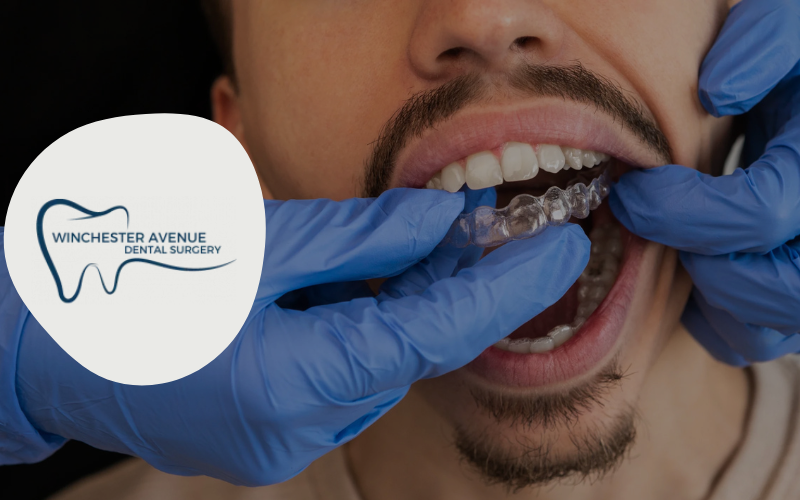
So, How Does Invisalign Work?
This is the question we're asked in nearly every consultation, so let's break it down properly.
Invisalign works by applying gentle, controlled pressure to specific points on your teeth. Each aligner in the series is designed using 3D digital mapping software, which plots the exact route your teeth need to travel from their current position to their final one. Rather than moving everything at once, the treatment is broken down into small, manageable stages, usually a series of aligners worn for one to two weeks each.
Here's what that looks like in practice:
Step 1: Assessment and digital scan.
Everything starts with a consultation, where we check that your teeth and gums are healthy enough for orthodontic movement. We'll usually carry this out alongside a routine dental check-up, since it's important to rule out anything like decay or gum disease before starting treatment. From there, we take a 3D digital scan of your mouth, no gloopy impression trays required.
Step 2: Your personalised treatment plan.
Using the scan, we map out the exact movements your teeth will make from start to finish. You'll actually get to see a simulation of your projected result before you commit to anything, which is genuinely one of the most satisfying parts of the process for most patients.
Step 3: Wearing your aligners.
You'll be given a series of clear aligners, each one worn for around 20 to 22 hours a day. You take them out to eat, drink anything other than water, and brush your teeth, then pop them back in. Every one to two weeks, you move on to the next aligner in the sequence, and your teeth continue their gradual shift.
Step 4: Check-ins along the way.
We'll want to see you periodically to make sure treatment is tracking as planned. Most of these visits are quick, since there's no wire-tightening involved, just a check that everything is moving as expected.
Step 5: Retention.
Once your teeth have reached their final position, you'll be given retainers to keep them there. Teeth have a natural tendency to drift back over time, so wearing your retainers as instructed is what protects your investment long term.
That's the mechanics of it. The clever part is that because each aligner is custom-made and digitally planned, the whole process is far more predictable than it used to be with older orthodontic systems.
What Can Invisalign Actually Fix?
People often assume Invisalign is only for very minor cosmetic tweaks, but it can address a surprisingly broad range of issues, including:
- Crowded teeth, where there isn't enough space in the jaw
- Gaps between teeth
- Overbites, where the upper teeth sit too far forward
- Underbites, where the lower jaw juts forward
- Crossbites, where upper and lower teeth don't align properly when biting down
- Open bites, where the front teeth don't meet at all
Mild to moderate cases tend to see the best and quickest results, but we've treated plenty of more complex cases too. The only way to know for certain whether Invisalign suits your particular bite is a proper assessment, since X-rays and scans will show things a mirror simply can't.
How Long Does Treatment Take?
This varies a lot from person to person. Very minor adjustments might be finished in as little as three months, while more involved cases can take anywhere from six to eighteen months. The honest answer is always "it depends on your teeth", which is a fairly
How Much Does It Cost?
This is the other question nearly everyone asks, right after how Invisalign works. Cost is a genuine consideration, and we'd rather be upfront about it than have you find out halfway through a consultation.
At Winchester Avenue Dental Surgery, Invisalign treatment starts from £2,800. That figure typically includes teeth whitening, a hygiene appointment, and custom-made retainers at the end of treatment, so there aren't nasty surprises tacked on once you're committed. You'll find a full breakdown of costs, along with pricing for our other treatments, on our price list, which is worth a look if you're comparing Invisalign against other treatments before deciding what's right for you.
We know paying a lump sum upfront isn't realistic for everyone, so we offer an in-house payment plan rather than pushing patients towards third-party finance companies, which often add interest and hidden fees. With our plan, you simply pay an affordable deposit and spread the rest across manageable installments, with no credit checks and no interest added.
If you're weighing up how much it costs against the alternative of leaving your teeth as they are, it's worth remembering that crowded or misaligned teeth are often harder to clean properly, which can lead to decay or gum problems down the line. Straighter teeth aren't just about appearance, they tend to be genuinely easier to look after.
What Does Daily Life With Invisalign Actually Feel Like?
Most Winchester Avenue Dental Surgery patients tell us the adjustment period is shorter than they expected. In the first few days after switching to a new aligner, you might notice mild pressure or tightness, that's simply a sign the aligner is doing its job. Any discomfort tends to settle within a day or two.
Because the aligners are removable, you can eat whatever you like, just take them out first. The main discipline is wearing them for the recommended 20 to 22 hours a day, since results depend on consistency. Plenty of patients get into the habit of only removing them for meals and brushing, which makes it easy to hit that target without really thinking about it.
When Invisalign Isn't the Right Fit
Invisalign is brilliant for straightening teeth, but it isn't the answer to every dental problem. If you're missing several teeth altogether, for example, orthodontic treatment isn't going to help until that's addressed first, and options like dentures might need to be discussed instead. Similarly, if you're dealing with active decay, gum disease, or a dental infection, that needs treating before any orthodontic movement can safely begin, which is exactly why we always start with a thorough assessment rather than jumping straight into treatment.
It's also worth knowing the difference between wanting to book Invisalign and needing urgent dental care. If you're in genuine pain right now, whether that's a broken tooth, a dental abscess, or something that's been keeping you up at night, that's a dental emergency and needs attention far sooner than an orthodontic consultation would normally be scheduled. Our emergency dentist Leicester service is available every day of the week, with consultations from just £40, so you're never left waiting in pain until the next available slot.
Ready to Find Out More?
If you've read this far, you probably already have a good sense of how does Invisalign work and roughly how much does it cost. The next step is a proper consultation, where we can look at your teeth, take a scan, and give you a treatment plan and price that's specific to you, rather than a general estimate.
Get in touch with the Winchester Avenue Dental Surgery team to book your Invisalign consultation, or if something's causing you pain right now, call us about a same-day appointment instead. We're here seven days a week, and we'd rather see you sooner than have you sit at home in discomfort.
Medically reviewed by Dr Zeinab, Principal Dentist at Winchester Avenue Dental Surgery. Last updated: 3 September 2026.
Disclaimer
The information in this article is intended for general educational guidance only and does not constitute personalised dental or medical advice. Red gingiva can have many causes, some of which are medically significant. For an accurate diagnosis, please book an appointment with a qualified dental professional.
Winchester Avenue Dental Surgery is a private dental practice in Leicester, led by Dr Zeinab. We offer dental check-ups, emergency dental appointments seven days a week for just £40, dentures, Invisalign, composite bonding, porcelain veneers, teeth whitening and dental crowns. View all treatment fees at our prices page.
Frequently asked questions
How does Invisalign work if I have a very crowded mouth?
Invisalign can treat crowding, but the severity matters. In mild to moderate crowding, aligners create small amounts of space and gradually shift teeth into alignment. In more severe cases, we might combine Invisalign with other techniques, or occasionally recommend a different treatment altogether. A scan and assessment will tell us exactly what's realistic for your bite.
How much does it cost compared to traditional braces?
Pricing varies depending on complexity, but Invisalign at Winchester Avenue Dental Surgery starts from £2,800, which includes whitening, a hygiene appointment, and retainers. Traditional fixed braces can sometimes work out cheaper for very complex cases, but most patients find the discretion and comfort of Invisalign worth the difference. Full details of both are listed on our price list, and we're happy to talk through both options honestly during your consultation.
Is Invisalign painful?
Not painful in the way most people imagine. You'll usually feel mild pressure for a day or two after switching to each new aligner, which is simply a sign your teeth are moving. It settles quickly and most patients find it far more comfortable than they expected.
Can I eat and drink normally with Invisalign?
Yes, that's one of the main advantages. Because the aligners are removable, you take them out to eat or drink anything other than water, then clean your teeth before putting them back in. There's no need to avoid sticky or crunchy foods the way you would with fixed braces.
Am I too old for Invisalign?
No. Invisalign is used just as often with adults as with teenagers, and there's no upper age limit. As long as your teeth and gums are healthy, age itself isn't a barrier to straightening your smile.